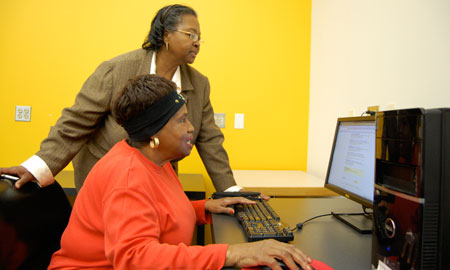
Carol Marshall, 69, lives at Luther Acres, an assisted living apartment complex in Vineland, New Jersey. Her days were once spent being as active as possible outside of her home, but now as the pandemic has altered all aspects of her daily living activities, her days are now spent alone, inside the walls of her apartment.
A once unusual day for Marshall is now considered the norm for her and many others seniors as they try to adapt to life during the Covid-19 pandemic. Instead of going to the grocery store with her son, Marshall has to have groceries delivered to her through InstaCart; to attend her daily doctors appointments, she has to submit her paperwork virtually, schedule appointments online, and sometimes attend virtual check-ups via Zoom; and to attend the weekly Cumberland County Community Church’s services she has to view it on Facebook Live.
“I’ve never used this much technology in my life… my computer usually sits in the corner, untouched and collects dust, but now I’ve had to learn how to use it more… it has become necessary to use so that I can go on about my life,” said Marshall.
Adapting to technology during the pandemic has been integral for Marshall and many other elderly people’s livelihood, as it’s preventing them from having to go out into public places and risk being exposed to Covid-19. The elderly population’s current adaption to technology is imperative considering the fact that80 percent of the deaths due to Covid-19 occur in those over the age of 65. This population is most impacted by the virus and because of that, lockdown measures for older individuals have been stricter.
While the changes and restrictions in daily life have been difficult to adjust to for many individuals, digital tools and resources are being utilized to help smooth the transitions. However, this transition and increased use of technology within society hasn’t been as smooth for elderly citizens. With society being forced to adopt technology now more than ever, studies have shown that there have been increased negative effects the digital divide is having on the elderly population during the pandemic.
According to a report done by CNN, this group of individuals that thedigital divideis disproportionately impacting includes: those who are older adults (65 and older), and those who are older adults with dementia, hearing loss and impaired vision who can have a hard time using digital devices and programs designed without their needs in mind.
The digital divide is a term used to describe the gap in access to new technology that often exists between different groups of people—including poorer communities, minorities, and elderly citizens. A recent study published in the Frontiers in Psychiatry Journal showed that elderly individuals who reported disliking technology mainly attributed this to the belief that it was “inconvenient, or that the costs outweighed the benefits.” The task of closing the digital divide therefore becomes an issue of not only improving elderly access to technology and increasing this population’s digital skills, but also working towards increasing elderly population’s motivation to use technology, and better understand the benefits it can offer.
As an 82-year-old legally blind citizen, Clarence Rashon is one of those most impacted by the unprecedented shift to virtual interactions.
Rashon has been a practicing Jehovah Witness for the past 50 years. Before the pandemic, he used to physically attend bible study every Wednesday and morning service every Saturday. However, due to social distancing regulations, the Kingdom Hall, the Jehovah Witness place of worship in Vineland, now holds their religious services virtually.
In fact, the 2021 Memorial Commemoration, the only holiday celebrated by Jehovah Witnesses, looked very different for Rashon and other worshipers. Instead of attending an in-person service, Rashon invited his immediate family over to his home and they watched the ceremony virtually via Zoom.
“My grandkids helped me set up the computer and phone so I could attend my services every Wednesday and Saturday…they made the Zoom icon big so I can log into the services by myself, but I still need to use my magnifier glass sometimes just to be able to see what I’m doing,” said Rashon.
Healthcare has also transformed to incorporate digital solutions, making both mental and physical healthcare available online. As this has become more common, reports indicate that its also been fairly successful in helping mitigate the negative effects of reduced healthcare access because of Covid-19.
Pauline Robertson, 74, who also resides at Luther Acres in Vineland, says that it was most difficult for her to get used to the way healthcare has been operating due to the pandemic.
Robertson has been undergoing chemotherapy for the past three months. On top of her doctor’s appointments that have to be done in person, she also has virtual appointments that are conducted at home.
“Every other Tuesday evening I have to log on to a call with my doctor…it’s like a regular check-up. She asks me a couple questions about how I’m feeling and how the medication is making me feel…. It was difficult to get used to this… I didn’t even have this tablet that I use for my appointments until December,” Robertson said.
Robertson and many elderly individuals were unprepared for this shift in healthcare services; in fact, a recent study published in the Journal of the American Medical Association, showed that about 40 percent of elderly individuals were unprepared to use telehealth resources, “predominantly due to lack of skills to effectively make use of the technology.” This has been further shown as telehealth resources continued to progress during the pandemic. For instance, according to the aforementioned study, the group with the highest adoption of telemedicine use has been those aged 20–44, despite the fact that the elderly population generally has the highest yearly number of doctor and hospital visits.
 In Black and Write