“The people of New Jersey can’t use what should be one of their greatest natural resources because it was stolen from them by corporate greed years ago,” said U.S. Sen. and former Newark mayor, Cory Booker, who spoke on the environmental racism the city suffers from. “I’ve said it before and I will say it again: the Passaic River is New Jersey’s biggest crime scene.”
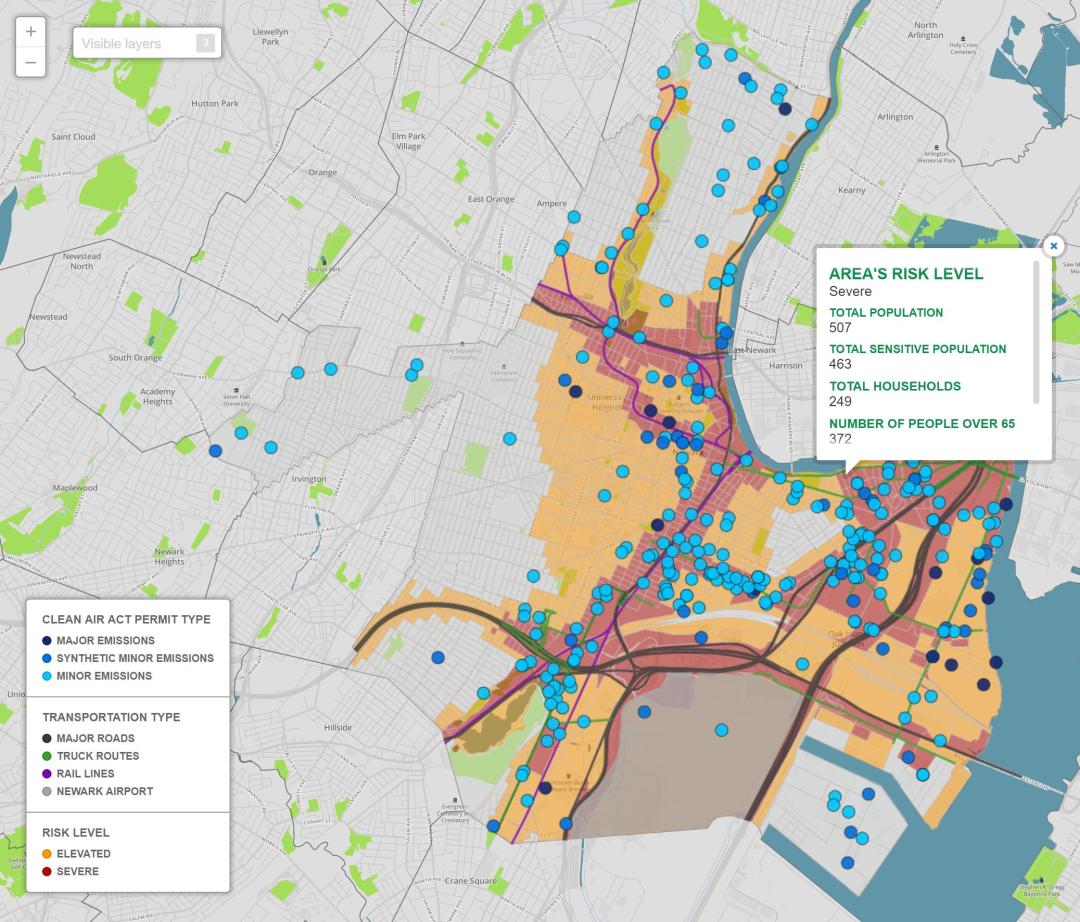
This environmental racism referenced can be spotlighted by taking a brief look at Newark’s demographics, past environmental issues, and the environmental conditions that the city and its surrounding areas are currently facing.
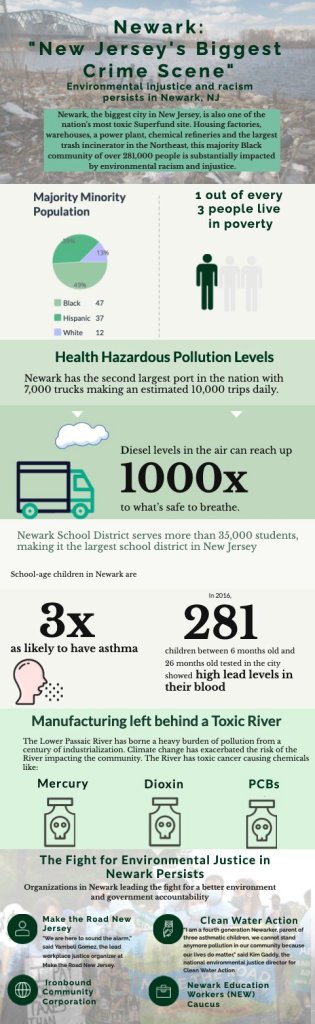
The neighborhoods closest to the Newark Airport are the cities of Elizabeth and Newark, which have primarily working class Black and Latino people living there. Newark, one of the oldest cities in the nation is 50% Black, while the neighboring city of Elizabeth is over 65% Latino. One out of every 3.5 resident in Newark live in poverty.
Those who visit Newark for the first time often remember the lingering smell that engulfs the city. Newark is home to the largest trash incinerator in the Northeast and the second largest port in the nation with 7,000 trucks making an estimated 10,000 trips daily. As a result, diesel levels in the air can reach up to 1,000 times more than what’s safe to breathe.
Because of the work of organizations like the Newark Education Workers (NEW) Caucus and Natural Resources Defense Council (NRDC), who led a citizen suit against the City of Newark and New Jersey state officials in 2018 to secure safe drinking water for Newark residents, one aspect of these harsh environmental conditions is almost remediated. Nationwide, about ten million lead pipes remain underground, delivering water to people’s homes every day, but this is more apparent in older cites like Newark where some pipes were over 100 years old.
At one point, testing revealed that lead levels exceeded the federal standard of 15 parts per billion in the drinking water at 30 city schools. However, scientists and health professionals contend that there is no safe level of lead exposure. Lead is a potent neurotoxin that has been linked to developmental delays in children and can damage the brain, red blood cells and kidneys. For months until pipes began to be replaced, water fountains were closed in schools and Newark officials were providing bottled water to over 15,000 homes that had lead contaminated water.
Now, less than three years after the work began, the replacement project, initially projected to take up to 10 years, is nearly complete. Newark has even been praised by Vice President Kamala Harris as a “model city” for eliminating dangerous lead lines.
However, when major storms hit the city this past August, and as local first responders battled flooded, heavily polluted roads to rescue residents waist-deep in water and residents documented images of debris that floated towards the LowerPassaic River, it became increasingly evident to the outside world that Newark is disproportionately exposed to hazardous environmental conditions beyond its water crisis.
Explore these hazardous environmental conditions through the below infographic, which touches on the more prevalent environmental issues plaguing the city.
Link to high resolution infographic
 In Black and Write